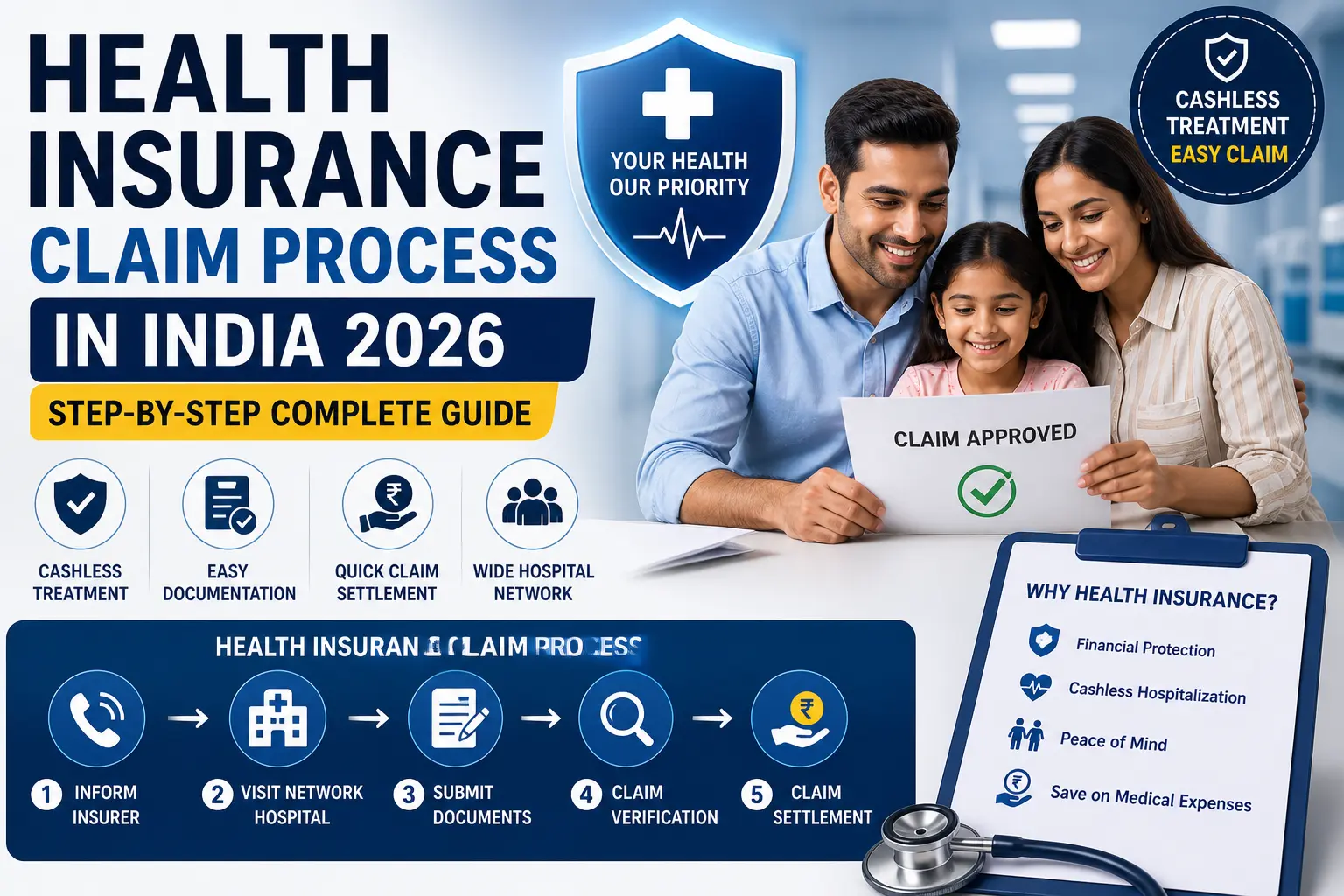
Health insurance helps reduce financial stress during medical emergencies, but many policyholders still feel confused about the actual claim process. Understanding how health insurance claims work can help you avoid delays, rejections, and unnecessary expenses.
If you are still comparing policies before understanding claims, you can first explore our detailed guides on Best Health Insurance Plans in India 2026 and Best Term Insurance Plans to understand how different insurance products provide financial protection.
What is a Health Insurance Claim?
A health insurance claim is a formal request made to your insurance company to cover medical expenses according to your policy terms.
When you are hospitalized or receive covered treatment, the insurer either:
- Pays the hospital directly (cashless claim), or
- Reimburses you later (reimbursement claim)
Types of Health Insurance Claims
1. Cashless Claim
In a cashless claim:
- Treatment happens at a network hospital
- The insurer directly settles approved bills with the hospital
- You only pay non-covered charges if applicable
This is one of the most preferred claim methods in 2026.
2. Reimbursement Claim
In reimbursement claims:
- You first pay hospital expenses yourself
- Later, you submit bills and documents to the insurer
- The insurer reimburses approved expenses
This is common when treatment occurs at a non-network hospital.
Step-by-Step Health Insurance Claim Process
Step 1: Inform the Insurance Company
As soon as hospitalization is planned or happens during an emergency:
- Inform your insurance provider
- Share policy details
- Provide hospital information
Many insurers now allow claim intimation through:
- Mobile apps
- Customer care
- WhatsApp support
Step 2: Verify Network Hospital
For cashless treatment:
- Check whether the hospital is part of your insurer’s network
Most top insurers discussed in our Best Health Insurance Plans in India 2026 guide provide large cashless hospital networks.
Step 3: Submit Required Documents
Common documents include:
- Health insurance card
- ID proof
- Doctor prescription
- Hospital admission papers
- Medical reports
- Discharge summary
- Final hospital bill
For reimbursement claims, original bills are usually required.
Step 4: Claim Verification
The insurer or TPA (Third Party Administrator) verifies:
- Policy validity
- Coverage eligibility
- Waiting period conditions
- Treatment details
- Exclusions
Step 5: Claim Approval or Settlement
If everything matches policy conditions:
- Cashless claim gets approved directly with the hospital
- Reimbursement amount is transferred to your bank account
Documents Required for Health Insurance Claims
| Document | Purpose |
|---|---|
| Policy Card | Policy verification |
| Aadhaar/PAN | Identity proof |
| Admission Papers | Hospital verification |
| Medical Reports | Diagnosis confirmation |
| Bills & Receipts | Expense proof |
| Discharge Summary | Treatment details |
Cashless Claim Process Explained
Cashless claims are generally smoother when:
- Treatment occurs in a network hospital
- Pre-authorization gets approved
- Documents are submitted correctly
Typical Cashless Flow:
- Visit network hospital
- Show insurance card
- Fill pre-authorization form
- Insurer reviews request
- Treatment approved
- Insurer settles eligible bills
Reimbursement Claim Process Explained
Reimbursement claims are used when:
- Hospital is outside the insurer network
- Emergency treatment happens quickly
- Cashless facility is unavailable
Typical Reimbursement Flow:
- Pay hospital bills
- Collect all documents
- Submit claim form
- Insurer reviews documents
- Approved amount reimbursed
Common Reasons Why Health Insurance Claims Get Rejected
Many claims are rejected because of avoidable mistakes.
Common Reasons Include:
- Non-disclosure of medical history
- Policy waiting period not completed
- Treatment excluded in policy
- Missing documents
- Incorrect claim details
- Lapsed policy
Reading policy terms carefully before purchase is very important.
Tips to Increase Claim Approval Chances
1. Buy Insurance Early
Early purchase reduces waiting period issues.
2. Disclose Medical History Honestly
Never hide pre-existing conditions.
3. Choose Adequate Coverage
Low coverage can increase out-of-pocket expenses.
4. Use Network Hospitals
Cashless claims are usually faster and simpler.
5. Keep All Documents Safe
Medical records and bills are extremely important.
Difference Between Health Insurance and Term Insurance
Health insurance covers medical expenses, while term insurance protects your family financially in case of your absence.
| Feature | Health Insurance | Term Insurance |
|---|---|---|
| Covers | Medical expenses | Life cover |
| Benefit Type | Hospital expense coverage | Lump sum payout |
| Main Purpose | Healthcare protection | Family financial security |
For complete financial planning, experts often recommend combining medical insurance with life coverage. You can explore life cover options in our Best Term Insurance Plans guide.
How Long Does Claim Settlement Take?
In 2026, many insurers settle:
- Cashless approvals within hours
- Reimbursement claims within a few days to weeks
Settlement time depends on:
- Document accuracy
- Policy conditions
- Hospital coordination
Conclusion
Understanding the health insurance claim process is extremely important before purchasing any policy. A good insurance plan is not only about low premium—it should also provide smooth claim support during emergencies.
Choosing insurers with strong hospital networks, transparent policies, and reliable customer support can make a huge difference during medical situations.
If you are still comparing policies, you can also read:
to build a complete financial protection strategy.
Frequently Asked Questions (FAQs)
What is the difference between cashless and reimbursement claims?
Cashless claims are settled directly by the insurer with the hospital, while reimbursement claims require you to pay first and claim later.
Can I claim insurance in any hospital?
Cashless treatment is available only at network hospitals. Reimbursement claims can be used elsewhere.
What happens if my claim gets rejected?
You can request clarification, submit additional documents, or escalate the issue through grievance channels.
How can I check my claim status?
Most insurers now offer online claim tracking through apps and websites.
Is pre-existing disease treatment covered?
Yes, but usually after completing the waiting period mentioned in the policy.
Leave a Reply